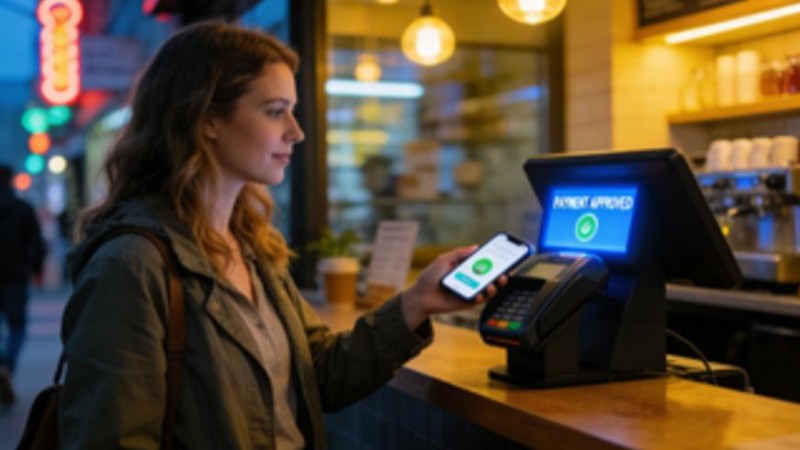
The simple act of tapping a card is about to get a major upgrade. The future of card payments is being reshaped by a wave of technologies that promise to make transactions faster, more secure, and nearly invisible. For merchants and consumers alike, understanding this shift is key to staying ahead.
The Current State of Card Payments at Point of Sale
Today's checkout experience is dominated by chip & PIN and contactless taps. While a vast improvement over the magnetic stripe, this system still has inherent friction points that innovators are eager to solve.
From Magnetic Stripe to Contactless: A Brief Evolution
The journey from swiping a magstripe to a near-field communication (NFC) tap was driven by security and speed. Each step—chip cards, contactless limits, and widespread terminal adoption—moved us toward quicker, more encrypted transactions.
The Friction Points in Today's Card Payment Systems
Despite progress, pain points remain. Consumers still fumble for cards or phones. Merchants grapple with hardware costs, complex fee structures, and the threat of sophisticated fraud. These challenges are the catalysts for the next evolution.
Key Drivers Shaping the Future of Card Payments
Several powerful trends are converging to redefine what a "card payment" means, pushing the industry beyond its plastic roots.
The Rise of Digital Wallets and Super Apps
Apps like Apple Pay and Google Wallet were just the beginning. They are evolving into super-apps that consolidate payments, loyalty cards, transit passes, and even identification, making the physical card a backup option rather than a primary tool.
Biometric Authentication: Beyond the PIN
Your face or fingerprint is becoming your password. Biometric authentication adds a powerful layer of security that is uniquely tied to the individual, reducing fraud from lost or stolen cards and moving us toward a truly password-less payment experience.
The Push for Real-Time Payments and Settlement
Globally, instant payment networks are challenging the card model. For merchants, real-time settlement improves cash flow. For consumers, it enables new use cases, like paying a friend instantly at a restaurant, blurring the lines between bank transfers and card transactions.
Emerging Technologies Redefining the POS Experience
These drivers are enabling specific innovations that will transform the checkout experience, whether online or in a physical store.
The Tokenization Revolution: Invisible and Secure Transactions
Tokenization replaces your sensitive card number with a unique, dynamic digital token for each transaction. This means your actual card details are never stored by a merchant or transmitted during payment, drastically reducing the risk of data breaches both online and at the POS.
"Just Walk Out" Technology and Frictionless Commerce
Why stop at a fast payment? Computer vision, sensor fusion, and AI are enabling checkout-free stores. The "point of sale" disappears entirely, as your account is charged automatically for what you take off the shelf, redefining convenience.
The Integration of Buy Now, Pay Later (BNPL) at the Terminal
Financing is becoming a standard payment option. At the digital terminal, consumers can now split a purchase into installments as easily as choosing credit or debit, embedding flexible financing directly into the payment flow.
The Evolving Role of the Physical Card and Terminal
With all this digital innovation, what happens to the physical tools we use today?
The Path to a Cardless Future: Pros and Cons
A fully digital future offers immense convenience and security but isn't without hurdles. Reliance on smartphone batteries, the need to include those hesitant or unable to adopt digital tools, and legacy merchant systems ensure plastic cards will remain in wallets as a reliable backup for years to come.
Smart Terminals: The POS as a Connected Business Hub
The terminal is no longer just a payment device. Modern smart POS systems are connected hubs that manage inventory, customer loyalty programs, sales analytics, and employee scheduling, becoming the central nervous system of a retail business.
Challenges and Considerations for the Future
Progress is never without obstacles. For the future of card payments to be widely adopted, key issues must be addressed.
Security in an Increasingly Digital Ecosystem
As biometrics and tokens become standard, new threats emerge. The security battle will shift to protecting the integrity of biometric data and securing the countless application programming interfaces (APIs) that connect this digital payment ecosystem.
Interoperability and the Standardization Hurdle
A seamless global experience requires standards. Ensuring a digital wallet or biometric system works flawlessly across different banks, merchant terminals, and international borders is a massive technical and collaborative challenge.
Regulatory Landscape and Data Privacy Concerns
Regulations like PSD3 in Europe and the growth of open banking will dictate how data is shared and used. Balancing innovation with stringent consumer data privacy demands will be a constant tightrope for the industry.
The Future of Card Payments: A Practical Outlook
So, what does this mean in practical terms? In the short term, expect contactless and digital wallet use to become nearly universal. Medium-term, biometric authentication and embedded financing will become commonplace. Long-term, the very concept of a "checkout" will fragment, with invisible payments integrated into more daily activities. The core function of the card payment—authorizing a funds transfer—will remain, but how we initiate and secure that transaction is on the cusp of profound change. Preparing for this future of card payments means investing in flexible, upgradable technology and prioritizing the customer experience above all.
FAQ Section: The Future of Card Payments
Will physical credit and debit cards disappear completely?
Not in the foreseeable future. They will remain crucial for backup, for populations less comfortable with digital tools, and in situations where digital systems fail. Their role will diminish, but not vanish.
How secure are biometric payments compared to a PIN?
Biometrics are generally more secure as they are unique to you and harder to steal or guess than a PIN. The security model shifts from "something you know" to "something you are," though it requires robust systems to protect the stored biometric template itself.
What does the future of card payments mean for small business owners?
It means opportunity. Adopting modern, integrated POS systems can streamline operations, offer customers more payment choices, and provide valuable business insights through data, all while benefiting from enhanced security features like tokenization.
Are digital wallet payments like Apple Pay considered "card payments"?
Yes, fundamentally. They use tokenized versions of your card credentials on file. The transaction is still processed over the card networks (Visa, Mastercard, etc.), but the method of initiating the payment is digital and more secure.