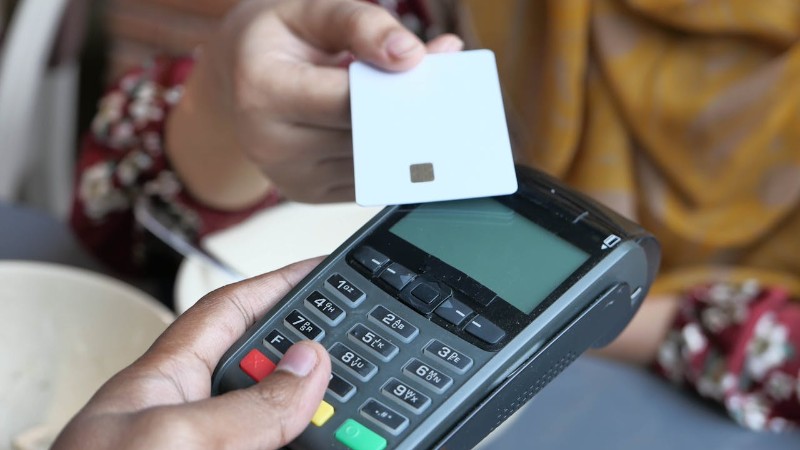
You're at the checkout, card in hand, ready to complete your purchase. The terminal beeps, but instead of a simple “Approved” or “Declined,” you get a confusing message: “Partial Approval.” What does this mean for your transaction and your finances? Understanding partial approval card payments is key to navigating these moments without stress.
Understanding Partial Approvals: The Basics
A partial approval occurs when your card issuer authorizes only a portion of the total transaction amount you're trying to charge. It's not a full decline, but it's not a full green light either. This middle-ground response happens in real-time during the authorization request, a complex dance between the merchant's terminal, the payment network, and your card issuer.
How a Partial Approval Transaction Works
The process is swift but involves several steps. First, the merchant's point-of-sale system sends an authorization request for the full amount to the card network. The network routes this to your card issuer. The issuer checks your account—specifically your available credit and account status. If the purchase amount exceeds your available credit but you have some credit free, the issuer may authorize only up to your available limit. This “partial auth” is sent back to the merchant, who must then decide how to proceed with the remaining balance.
Partial Approval vs. Full Decline: Key Differences
The core difference lies in outcome and cause. A full decline means zero dollars are authorized, often due to a frozen card, suspected fraud, or absolutely no available credit. A partial approval, however, authorizes a specific sum. It's essentially the issuer saying, “We can cover this much right now, but not the full amount.” For you, the cardholder, this means the transaction isn't dead—you still have options to complete the sale.
Common Scenarios That Trigger a Partial Approval
Certain everyday situations make a partial approval more likely. Recognizing them can help you anticipate and manage the process.
When Your Available Credit is Less Than the Total
This is the most straightforward cause. If your purchase is for $150 but you only have $100 of available credit on that card, the issuer may approve $100 and decline the remaining $50. It's a direct result of nearing or hitting your credit limit.
Holds, Pre-Authorizations, and Split Tenders
Other financial holds can shrink your available credit unexpectedly. A hotel's incidental hold or a gas station's $100 pre-authorization temporarily reduces your limit. If you make another large purchase before that hold falls off, a partial approval is possible. Additionally, if you initiate a split tender (paying part with one card, part with another), the first card may only be charged for its portion, which can appear as a partial approval.
The Impact of Partial Approvals: Pros, Cons, and Considerations
Partial approvals present a mix of convenience and complexity for both sides of the transaction.
For the Cardholder: Convenience and Potential Pitfalls
The clear benefit is the ability to complete at least part of your purchase immediately, which can be crucial. However, risks exist. You might incur over-limit fees if the approved amount pushes you past your limit. Multiple authorization holds can tie up your credit. While the act of a partial approval itself doesn't hurt your credit score, the high utilization it signals can negatively impact it.
For the Merchant: Completed Sales and Operational Hurdles
For a business, a partial approval means a potential sale isn't fully lost. They secure revenue for the approved amount. The downside is operational friction. The cashier must manage a non-standard prompt, ask the customer for another form of payment, or void the transaction. It can slow down checkout lines and create customer confusion if staff aren't trained to handle it smoothly.
How to Handle a Partial Approval: A Step-by-Step Guide
When you face a partial approval at checkout, don't panic. Follow these steps to resolve the situation efficiently.
At the Point of Sale: Your Immediate Options
You typically have three choices. First, you can use a different payment method (another card, debit, or cash) to cover the remaining balance. Second, you can ask the cashier to reduce the purchase amount to match the approved sum (e.g., putting one item back). Third, you can cancel the transaction entirely.
After the Transaction: Managing Your Account
Once you leave the store, take a moment to log into your card account. Check your available credit to understand your new balance. Note that the partially approved amount will likely show as a pending charge. If the transaction caused confusion or you're concerned about fees, contact your card issuer directly for clarification.
Best Practices to Avoid Unwanted Partial Approvals
A little proactive management can prevent most partial approval surprises, making for a smoother experience for everyone.
Tips for Cardholders (Monitor Limits, Use Alerts)
Regularly check your available credit, especially before large purchases.
Set up low-balance or transaction alerts through your card issuer's app.
Be mindful of large pre-authorization holds from travel or fuel and plan your spending accordingly.
Consider making a payment to free up credit before a big shopping trip.
Tips for Merchants (POS Settings and Customer Communication)
Configure your POS system to clearly display partial approval messages and guide staff on next steps.
Train employees on how to calmly explain the situation and present customer options.
Communicate hold policies clearly at gas pumps, hotel check-in, or car rental counters to set accurate expectations.
By demystifying the process, both cardholders and merchants can transform partial approval card payments from a point-of-sale hiccup into a manageable financial event. Staying informed and prepared is the best strategy for seamless transactions.
FAQs: Partial Approval Card Payments Explained
Can I get a partial approval with a debit card, or is it only for credit cards?
Partial approvals are far more common with credit cards due to credit limits. With debit cards, transactions are typically approved or declined based on the exact available account balance, though some unique scenarios with holds can create similar situations.
Does a partial approval hurt my credit score?
The approval itself does not directly impact your score. However, if it causes your credit utilization ratio to spike (using a high percentage of your limit), that can negatively affect your score. High utilization is a key scoring factor.
What happens if I don't pay the remaining balance after a partial approval?
The transaction only settles for the approved amount. You are only charged for what was authorized. The remainder of the purchase is simply not completed, so there is no "remaining balance" to pay on that transaction.
As a merchant, can I disable partial approvals on my payment terminal?
This depends on your payment processor and terminal settings. Some systems allow you to set preferences to decline transactions outright if they can't be fully authorized. Contact your payment provider to discuss your terminal's configuration options.
How long does it take for the "held" funds from a partial approval to be released back to my account?
The authorized (held) amount from a partial approval follows the same timeline as any standard authorization hold—typically 1-5 business days before it disappears if the merchant doesn't finalize the sale. The release is automatic.