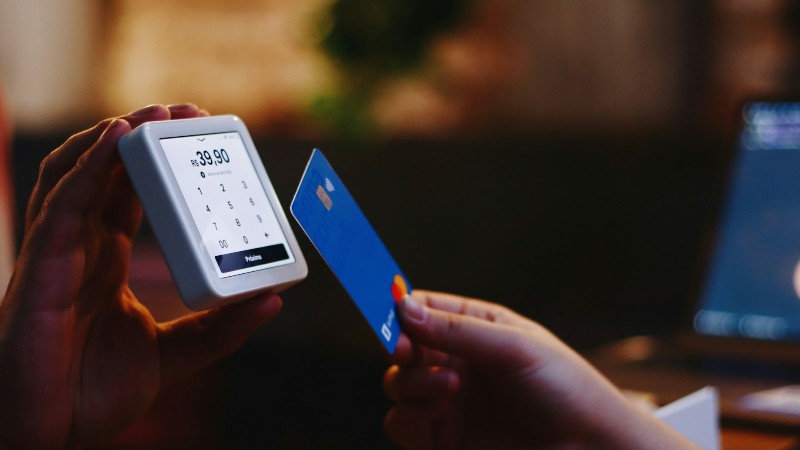
If you accept card payments, understanding EMV chip cards is non-negotiable. This technology represents the most significant shift in payment security in decades, directly impacting your business's fraud risk and bottom line. This guide breaks down everything merchants need to know, from the basic technology to practical implementation steps.
What Are EMV Chip Cards? The Basics for Merchants
EMV stands for Europay, Mastercard, and Visa, the three companies that created the global standard. An EMV chip card contains a small, secure microprocessor that generates a unique, dynamic code for every single transaction. This is a fundamental departure from the static data stored on a magnetic stripe.
EMV vs. Magnetic Stripe: A Fundamental Shift
Think of a magstripe like a passport number that never changes. Once a fraudster steals that data, they can easily create counterfeit cards. The EMV chip, however, acts like a one-time password generator. The transaction code it creates for a $50 coffee purchase is completely different from the code for a $100 gas purchase, making stolen data useless for future fraud.
How EMV Chip Card Transactions Work (The "Dip")
The process is simple for the customer but complex in the background. Instead of swiping, the customer inserts (or "dips") their card into a slot on the terminal. The chip and terminal communicate, the unique cryptogram is generated, and the customer verifies with a PIN or signature. The terminal then sends this encrypted data to the processor for authorization.
Why EMV Adoption is Critical for Your Business
Adopting EMV isn't just about keeping up with technology; it's a direct financial and reputational safeguard. The primary drivers are a major rule change and significantly enhanced security.
Shifting Fraud Liability: Understanding the "Liability Shift"
This is the most crucial concept for merchants. Following the liability shift dates set by the card networks, the party with the less secure technology in a fraudulent transaction assumes the financial loss. If you haven't upgraded your terminal to accept EMV chip cards and a customer uses a counterfeit chip card, you—not the card issuer—are likely liable for the resulting chargeback. This rule makes EMV a direct business investment.
Enhanced Security and Customer Trust
By virtually eliminating counterfeit card fraud at the point of sale, EMV protects your customers' data and your business from costly chargebacks. It also signals to customers that you take their security seriously, building confidence and reducing friction at checkout.
What Merchants Need for EMV Acceptance
To accept EMV chip cards, you need more than just a new terminal. It requires a coordinated upgrade across your payment ecosystem.
EMV-Certified Hardware: Terminals and Readers
Your old magstripe-only terminal won't work. You need an EMV-certified PIN pad or terminal with a chip reader. Many modern terminals also include contactless (NFC) capability, allowing you to accept tap-to-pay payments from phones and contactless cards, which use the same secure chip technology.
Payment Processor and Software Compatibility
Your new hardware must be supported by your payment processor and point-of-sale (POS) software. Contact your provider to ensure they have enabled and certified your account for EMV transactions. The terminal, software, and processor all must be properly configured to work together.
Common EMV Transaction Types and How to Process Them
Once set up, you'll encounter a few standard scenarios. Processing them correctly is key to maintaining security and liability protection.
Chip-and-PIN vs. Chip-and-Signature
Both methods use the secure chip. Chip-and-PIN requires the customer to enter a personal identification number, adding a second layer of verification. Chip-and-signature relies on the chip for data security but uses a signature for customer verification. Follow the prompts on your terminal for the correct method.
Handling Fallback Transactions (When the Chip Fails)
If a chip is damaged, your terminal will prompt you to swipe the card's magnetic stripe as a "fallback" transaction. This process is guided by the terminal and requires online authorization. Crucially, fallback transactions may have different liability rules, so it's essential to only swipe when the terminal explicitly instructs you to do so.
Navigating Challenges and Best Practices
Transitioning to EMV can come with minor hurdles. Being prepared ensures a smooth experience for you and your customers.
Transaction Speed and Customer Experience
Yes, dipping a card is slightly slower than swiping. The card must remain inserted while communicating with the bank. Manage this by training staff to prompt customers to insert their card early in the transaction and by clearly explaining the security benefit to customers who may be unfamiliar.
Maintaining Your EMV Equipment
Keep card reader slots clean and free of debris. Ensure your terminal software is regularly updated, as processors often release security patches and enhancements. A well-maintained terminal reduces errors and transaction delays.
The Future of Payments: Beyond the Chip
EMV chip technology laid the secure foundation for today's fastest-growing payment methods. Contactless payments (like Apple Pay and Google Pay) and digital wallets use a derived form of EMV's dynamic data, called tokenization, making them equally secure. By adopting EMV, you're not just solving today's security need—you're preparing your business for the next wave of digital payments.
For any merchant, getting EMV chip cards explained and implemented is a fundamental step in operating a secure, modern, and trustworthy business. It's an essential defense against fraud and a clear signal to your customers that their safety is your priority.
FAQ: EMV Chip Cards Explained for Merchants
Are EMV chip cards and contactless payments (like Apple Pay) the same thing?
They are based on the same security standard. Contactless payments use EMV technology but transmit the dynamic data wirelessly via NFC (Near Field Communication). Both are far more secure than magnetic stripes.
What happens if I swipe a chip card instead of dipping it?
If the chip is functional but you swipe, you may be liable for any resulting counterfeit fraud due to not using the more secure method. Always follow the terminal's prompts.
Do I need a new merchant account to accept EMV chip cards?
No, you don't need a new account. However, you must upgrade your terminal and ensure your existing payment processor supports EMV transactions.
Are there any transaction fees associated with EMV technology?
There are no specific "EMV fees," but your processor may charge for new hardware or have different pricing tiers. The cost of not upgrading (via chargebacks) is typically much higher.
Is EMV compliance mandatory for all businesses?
It's not a government law, but due to the liability shift rules, it is effectively mandatory for any business that wants to avoid assuming the full risk of counterfeit card fraud.