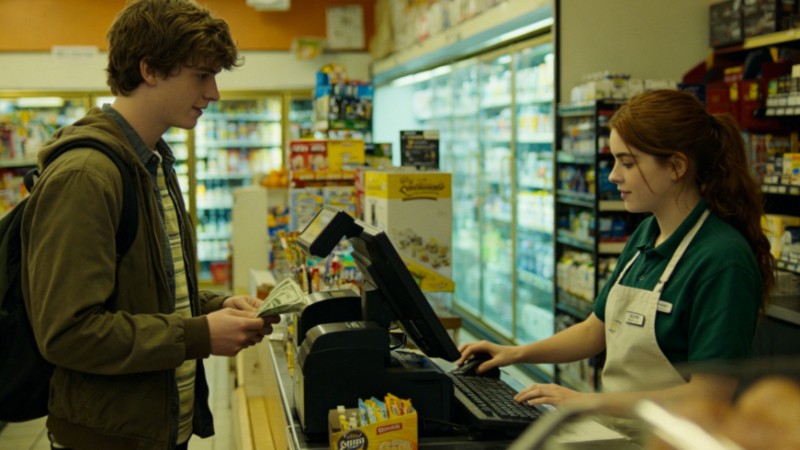
Every time a customer taps, dips, or swipes, your profit margin shifts. The payment methods your customers choose—your retail payment mix margins—directly determine how much of that sale lands in your bank account. Ignoring this hidden cost leak is one of the fastest ways to watch hard-earned revenue disappear.
Cash, credit cards, debit cards, digital wallets, and Buy Now, Pay Later (BNPL) services each carry a very different price tag for your business. Understanding these differences and taking action is no longer optional; it is essential for protecting profitability in a competitive retail environment.
What Is a Retail Payment Mix and Why Does It Impact Margins?
Your payment mix is simply the percentage breakdown of how customers pay you. For example, 30% cash, 50% credit cards, 10% debit, and 10% BNPL. Each method has a unique cost structure. The more high-cost transactions you process, the lower your net margin becomes, regardless of your gross markup.
The Hidden Costs of Convenience: Beyond the Sticker Price
Customers see a flat price on the tag. You see a different story. Interchange fees, assessment fees, processor markups, and settlement delays all reduce your net revenue. That $100 sale paid with a premium rewards card might net you only $97.50 after fees. The convenience you offer has a real cost.
Why Traditional Margin Calculations Are Misleading
Many retailers calculate margin using a blended average cost of payments. This is a dangerous shortcut. It hides the fact that some transactions are far more profitable than others. A true analysis requires looking at the specific cost per transaction type, not a rough estimate.
Cash vs Card Profit Margin Retail: A Side-by-Side Cost Comparison
Let us compare a $100 sale paid by cash versus a major credit card. This cash vs card profit margin retail comparison shows the real difference at the bottom line.
| Cost Factor | Cash ($100 Sale) | Credit Card ($100 Sale) |
|---|---|---|
| Processing fee | $0.00 | $2.50 (2.5% effective rate) |
| Cash handling & deposit | $0.30 | $0.00 |
| Theft/error risk | $0.10 | $0.00 |
| Net revenue after payment costs | $99.60 | $97.50 |
Cash retains over $2 more per transaction. For a store processing 500 such sales daily, that difference adds up to more than $1,000 per day in lost margin from card transactions alone.
The True Cost of Card Acceptance (Interchange, Assessment, and Markup)
Card processing fees are not a single line item. They consist of interchange fees (set by card networks), assessment fees (network-level charges), and processor markup. The effective rate you pay is often higher than the quoted rate because of transaction-based surcharges and monthly minimums.
The "Free" Cost of Cash (Security, Handling, and Deposit Risks)
Cash is not completely free. Counting errors, internal theft, bank deposit fees, and the time spent reconciling cash drawers all add up. However, these costs are typically far lower than card processing fees, especially for smaller transactions.
Credit Card Fees Impact Margin More Than You Think
The impact of credit card fees on margin is often underestimated. High-cost credit card transactions, especially those from rewards cards and corporate cards, disproportionately erode profit. This is especially painful on low-ticket items where the fee represents a large percentage of the sale.
The Rewards Card Penalty: Who Pays for the Points?
Premium rewards cards carry the highest interchange fees. When a customer earns 2% cashback or airline miles, you are effectively subsidizing that reward. A card charging 3.5% on a $50 sale costs you $1.75. On a 10% net margin item, that fee eats 35% of your profit.
The "Small Ticket" Profit Trap
A fixed per-transaction fee of $0.25 plus 1.5% on a $5 cup of coffee results in a fee of $0.32, or 6.4% of the sale. If your net margin is 10%, that single transaction fee consumes nearly two-thirds of your profit. Small ticket items are a major area of margin leakage.
BNPL Impact Retail Profitability: The New Margin Killer
Buy Now, Pay Later services have exploded in popularity. While they can boost conversion and average order value, the BNPL impact retail profitability picture is mixed. These services typically charge a flat fee per transaction, often $0.30 plus 3% to 6% of the order value. This makes them one of the most expensive payment methods.
The Trade-Off: Higher Conversion vs. Higher Cost Per Transaction
BNPL can increase conversion rates by 20% to 30% and lift average basket size. However, the fixed fee structure means a $100 BNPL transaction might cost you $3.30 to $6.30. Compare that to a debit card fee of $0.50. The increased volume must be significant to offset the higher per-transaction cost.
Return and Dispute Costs in the BNPL Ecosystem
BNPL orders often have higher return rates. When a customer returns an item, you still pay the processing fee on the original transaction. Chargeback complexities also increase, as disputes involve the BNPL provider, the merchant, and sometimes the customer's bank. These costs further compress already thin margins.
Payment Mix Optimization Retail: A Strategic Framework for Action
Payment mix optimization retail is not about removing popular options. It is about understanding your data and gently steering customers toward lower-cost methods. Here is a simple three-step framework.
Step 1: Audit Your Current Payment Method Cost Comparison Retail Data
Pull transaction-level data from your POS system and payment processor. For each payment type (debit, credit, cash, digital wallet, BNPL), calculate the true net margin after all fees. You may be surprised to see which methods are actually costing you money.
Step 2: Identify the "Margin Leak" Segments
Look for specific patterns. Which product categories have the highest use of premium credit cards? Which customer segments use BNPL most often? Which transaction sizes are most affected by fixed fees? Pinpointing these segments allows you to target your optimization efforts.
Step 3: Implement Tactics to Steer Customer Choice
Use ethical, non-punitive strategies. Offer a small cash discount (e.g., 2% off for cash or debit). Set a reasonable minimum purchase amount for credit cards. Place lower-cost options like debit or digital wallets more prominently at checkout. Avoid penalizing customers; instead, reward better choices.
How to Reduce Payment Cost Retail Without Hurting Sales
You can reduce payment cost retail without removing popular options. Two strategies offer immediate impact: renegotiating your processor agreement and encouraging debit and ACH payments.
Renegotiating Your Processor Agreement
Benchmark your current effective rate against industry averages. If your volume has increased, request a rate review. Ask for interchange-plus pricing instead of tiered pricing, which is more transparent. A 0.2% reduction on $1 million in annual card volume saves $2,000.
Leveraging Debit and ACH as Margin-Friendly Alternatives
Debit cards have significantly lower interchange fees than credit cards. Direct bank transfers (ACH) cost pennies per transaction. Encourage these methods by highlighting them at checkout and offering a small incentive, such as a 1% discount or free shipping on orders paid via debit or ACH.
Final Section: The Future of the Payment Mix and Retail Profitability
The payment landscape will only grow more complex. Digital wallets, cryptocurrency, and new BNPL variants will continue to emerge. Retailers who treat payment mix as a strategic lever—not a fixed cost—will protect and even grow their margins. Start with a simple audit of your own data. The hidden profit in your retail payment mix margins is waiting to be recovered.
FAQs about Retail Payment Mix Margins
What is the most profitable payment method for a retailer?
Cash is generally the most profitable due to zero processing fees, though it carries handling and security costs. Debit cards are typically the most profitable electronic method.
How much do credit card fees actually cut into a small business's profit margin?
On average, credit card fees can consume 1.5% to 3.5% of a transaction's value. For a business with a 10% net profit margin, this can represent 15% to 35% of total profit being lost to fees.
Does offering Buy Now, Pay Later (BNPL) actually increase or decrease overall profitability?
It depends. BNPL can increase average order value and conversion rates, but its high fixed fees can reduce net profit per transaction. It is most effective for high-ticket items where the increased conversion outweighs the cost.
What is the best way to encourage customers to use lower-cost payment methods?
Effective strategies include offering a small cash discount, setting a reasonable minimum for credit card purchases, and prominently displaying lower-fee options like debit or digital wallets at checkout.
How often should a retailer review their payment processing costs?
At least annually, or whenever your transaction volume increases by 20% or more. Market rates and your payment mix change, so regular audits are essential for maintaining healthy margins.