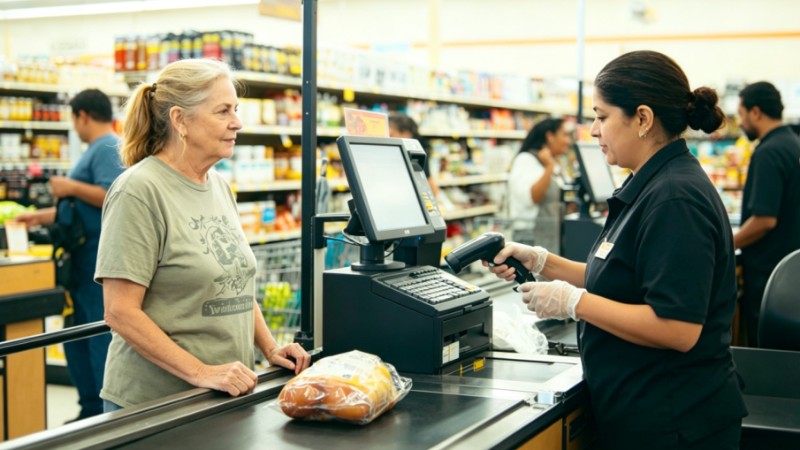
Every time a cashier scans a product, a small but critical transaction takes place. When that scan is accurate, the price matches the item, inventory updates correctly, and the customer walks away satisfied. But when barcode scanning payment accuracy fails, the consequences ripple through revenue, operations, and trust. This article unpacks why accuracy matters, where errors creep in, and how retailers can protect payment integrity at the point of sale.
What Is Barcode Scanning Payment Accuracy and Why Should Retailers Care?
Barcode scanning payment accuracy refers to the ability of a point-of-sale system to correctly read and match a barcode to the intended product and price. It is the foundation of payment integrity—ensuring the customer pays the right amount for the right item. Without it, retailers face hidden losses that quietly erode margins.
The Link Between Barcode Scans and Payment Errors
A single misread barcode can trigger an overcharge, an undercharge, or a mismatch between the scanned item and inventory records. For example, a damaged barcode on a high-value electronic might cause the system to pull up a cheaper substitute. The customer either pays too much or too little, and the inventory ledger shows a phantom item.
The True Cost of Inaccurate Scanning at the Point of Sale
Inaccurate scanning leads to revenue leakage from undercharges, chargeback risks when customers dispute overcharges, and operational overhead from manual corrections. Studies in the retail sector suggest that even a 1% error rate in scanning can translate into thousands of dollars in lost revenue per store annually. Customer dissatisfaction also spikes, increasing return rates and negative reviews.
Common Causes of Barcode Payment Errors in Retail Environments
Understanding the root causes of barcode payment errors in retail helps retailers target their fixes. Most errors fall into three categories: label issues, hardware limitations, and human mistakes.
Damaged or Poorly Printed Barcodes
Barcodes on product packaging can fade, tear, or become smudged during shipping and handling. Low-contrast printing—where the black bars are not dark enough against a white background—also triggers misreads or no-reads. These issues are especially common with economy-grade labels on private-label goods.
Scanner Calibration and Environmental Factors
Point of sale scanning accuracy depends on scanner condition and environment. An aging scanner with dirty optics may struggle with curved surfaces or glossy packaging. Harsh overhead lighting or glare from glass bottles can confuse the sensor. Even the angle at which the cashier holds the product matters.
Human Error in Checkout and Label Placement
Cashiers sometimes override a barcode that fails to scan, manually entering a price or code from memory. This bypasses automated checks and introduces risk. Poor label placement—such as a barcode wrapped around a curved edge—also makes it difficult for scanners to get a clean read.
How Barcode Errors Affect Revenue and Operational Efficiency
The impact of scanning inaccuracies extends far beyond the checkout lane. How barcode errors affect revenue becomes visible in financial reports, inventory counts, and customer feedback over time.
Direct Revenue Leakage from Undercharging and Overcharging
Undercharging is a direct loss: the retailer receives less than the intended price. Overcharging, while seemingly a gain, often leads to refunds, chargeback fees, and lost customer loyalty. Both scenarios create a pattern of small, repeated mismatches that compound into significant losses over weeks and months.
Inventory Discrepancies and Reordering Chaos
When a barcode is misread, the inventory system records the wrong item as sold. This creates phantom inventory—stock that appears available but is actually gone—or phantom shortages that trigger unnecessary reorders. Both scenarios waste capital and frustrate supply chain planning.
Erosion of Customer Trust and Increased Returns
Customers who notice a billing error may question the store's reliability. They are more likely to return items, write negative reviews, or take their business elsewhere. In an era of social media, a single viral post about an overcharge can damage a brand's reputation for months.
Retail Payment Integrity Solutions to Improve Barcode Accuracy
Improving barcode scanning accuracy does not require a complete system overhaul. A layered approach using technology, standards, and workflow design delivers measurable results.
Invest in High-Performance POS Scanners and Software
Modern scanners support multiple barcode symbologies, adaptive lighting, and real-time error alerts. Look for models that can read damaged or poorly printed codes and that integrate with POS software capable of flagging suspicious scans. This investment directly improves point of sale scanning accuracy.
Implement Barcode Quality Standards and Regular Audits
Set clear specifications for barcode print quality, contrast, and size. Require suppliers to provide print verification reports for new product labels. Conduct periodic field tests using handheld verifiers to catch issues before they reach checkout. This proactive approach is a core retail payment integrity solution.
Use POS Barcode Mismatch Prevention Workflows
System-level checks can catch errors before payment finalizes. Weight-based validation compares the scanned item's expected weight to the actual weight on the scale. Price-lookup cross-referencing checks that the scanned price matches the shelf price. These workflows are effective forms of POS barcode mismatch prevention.
Measuring and Monitoring Scanning Accuracy Over Time
What gets measured gets managed. Tracking scanning accuracy requires consistent metrics and a feedback loop between store operations and IT teams.
Key Performance Indicators for Payment Integrity
Three metrics matter most: first-pass read rate (the percentage of barcodes read correctly on the first attempt), exception rate (scans that require manual override), and average over/undercharge value. Tracking these over time reveals trends and problem areas.
Building a Feedback Loop Between Store Operations and IT
Exception logs from the POS system should be reviewed weekly. Customer complaints about pricing discrepancies should be logged and analyzed. When a specific product or store shows a spike in errors, IT can investigate hardware, software, or label issues. This loop drives continuous improvement.
Future-Proofing Payment Integrity Against Emerging Scanning Challenges
Retail is evolving, and so are scanning technologies. Preparing for new barcode formats and AI-assisted scanning helps maintain accuracy in the years ahead.
Adapting to New Barcode Formats and Digital Labels
2D barcodes like QR codes and GS1 DataBar are becoming more common for product identification and traceability. Digital labels displayed on electronic shelf tags also introduce dynamic barcodes. Retailers should ensure their POS systems can read these formats without disruption.
The Role of AI in Reducing POS Barcode Mismatches
Machine learning models can analyze scan patterns to predict which items are prone to errors. AI can also auto-correct scan failures by comparing the scanned data with product images or weight data. This technology is still emerging but promises to further strengthen barcode scanning payment accuracy.
Final Thoughts: Making Barcode Scanning Accuracy a Core Retail Priority
Barcode scanning accuracy is not just a technical detail—it is a strategic lever for protecting revenue, inventory, and customer relationships. Retailers who invest in better hardware, clearer label standards, and smarter workflows will see immediate returns in fewer disputes, lower chargebacks, and smoother operations. In a competitive market, barcode scanning payment accuracy is a quiet advantage that pays for itself many times over.
FAQs about Barcode Scanning Payment Accuracy
How do barcode scanning errors affect a retailer's bottom line?
They cause direct revenue loss from undercharges, chargeback fees from overcharges, and hidden costs from inventory mismatches and customer returns.
What are the most frequent causes of barcode payment errors at the point of sale?
Damaged or poorly printed labels, aging scanner hardware, poor lighting, and cashier overrides are the top causes of barcode payment errors in retail.
Can barcode scanning accuracy be improved without replacing all hardware?
Yes. Implementing barcode quality standards, regular audits, and POS barcode mismatch prevention workflows can significantly reduce errors even with existing hardware.
How often should retailers audit their barcode scanning systems for payment integrity?
Monthly field tests with a barcode verifier are recommended, with quarterly reviews of exception logs and customer complaint data to identify trends.
What role does employee training play in preventing POS barcode mismatches?
Training helps cashiers recognize when to rescan instead of manually overriding, and it reinforces proper label placement and scanner handling techniques.