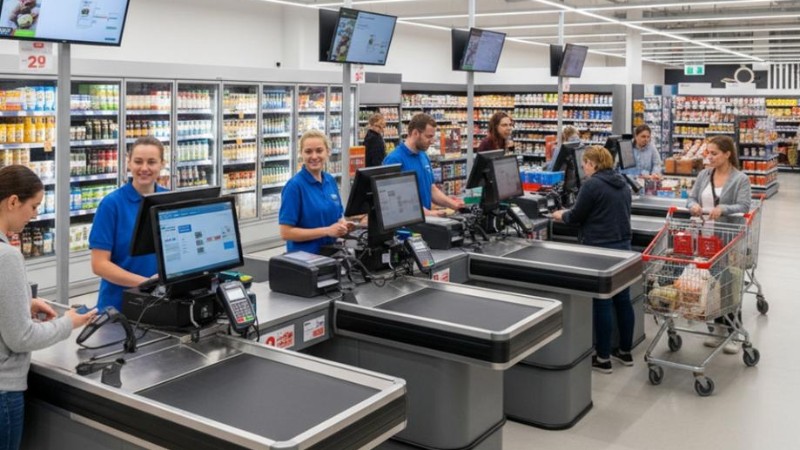
For retail store operators, understanding the complete structure of retail POS fees is essential for accurate budgeting and profitability. These costs, often layered and complex, directly impact your bottom line. This guide provides a detailed breakdown of every fee component, empowering you to forecast expenses and avoid unexpected charges.
What Are Retail POS Fees? Understanding the Cost Structure
Retail POS fees encompass all charges associated with accepting payments and using the point-of-sale system. They represent the operational cost of facilitating secure, convenient transactions. These fees are typically divided into two primary categories: payment processing fees and POS system fees. A clear grasp of this distinction is the first step toward cost control.
The Two Main Pillars: Payment Processing vs. POS System Fees
Payment processing fees are incurred per transaction, paid to banks and networks for moving money from the customer's account to yours. POS system fees are the costs for the software and hardware platform itself, usually charged as a recurring subscription or one-time purchase. Confusing these two cost centers is a common budgeting error.
Why Your Fee Breakdown Impacts Profitability
Margins in retail are often slim. A seemingly small percentage fee, when applied to every card transaction, represents a significant annual expense. Understanding your exact payment processing cost structure and POS system monthly fees allows for precise profit calculation, informed pricing strategies, and effective operational budgeting.
Breaking Down Payment Processing Fees for Retail Stores
Each card transaction triggers a series of fees. This POS payment fees breakdown retail operators need demystifies the line items on your merchant statement.
Interchange Fees: The Non-Negotiable Core Cost
Set by card networks (Visa, Mastercard), interchange fees are paid to the card-issuing bank. They vary by card type (debit, credit, commercial, rewards), transaction method (swiped, tapped, keyed), and merchant category. Premium reward cards carry the highest interchange rates, a critical factor for retail transaction fees.
Assessment Fees & Processor Markup: The Variable Components
Assessment fees are smaller charges paid directly to the card networks. The processor markup, or service fee, is what your payment processor charges for their role. This is the primary negotiable component of your card processing fees retail store operators pay. Transparency here is key.
Understanding Pricing Models: Flat Rate, Interchange Plus, and Tiered
Processors use different models to bundle these costs:
Flat Rate: A single percentage plus a fixed fee per transaction. Simple but often more expensive for high-volume or low-ticket sales.
Interchange Plus: The interchange rate plus a fixed markup. Highly transparent and typically the most cost-effective model for established businesses.
Tiered: Transactions are sorted into "qualified," "mid-qualified," and "non-qualified" tiers with different rates. Notoriously opaque and can lead to inflated costs.
Understanding POS System Monthly Fees and Costs
Separate from processing, these are the costs for the POS platform. Understanding POS system monthly fees retail operators face involves looking at software, hardware, and ancillary services.
Software Subscription Plans: Features, Users, and Pricing Tiers
Most modern POS systems charge a monthly SaaS fee. Pricing tiers are based on features (e.g., advanced inventory, CRM), the number of registers or user logins, and sales volume. Scaling your plan to your actual needs is crucial for cost management.
Hardware Costs: Purchase, Lease, or BYOD?
Options include purchasing equipment outright (higher upfront cost, no long-term commitment), leasing (lower initial outlay but higher total cost), or using a Bring-Your-Own-Device (BYOD) model with compatible tablets and card readers. Each has distinct financial implications.
Setup, Installation, and Support Fees
Be aware of potential one-time charges for initial system setup, data migration, or on-site staff training. Some providers also offer premium support packages for an additional monthly fee beyond standard customer service.
Identifying and Avoiding Hidden POS Costs in Retail
Beyond advertised rates, several hidden POS costs retail operators encounter can inflate the total cost of ownership. Scrutinize contracts for these items.
Contract Termination and Early Cancellation Fees
Many agreements lock you into a 3-5 year term. Exiting early can trigger penalties amounting to hundreds of dollars or the remainder of monthly fees. Month-to-month agreements offer greater flexibility.
Fees for PCI Compliance, Paper Statements, and "Inactivity"
Common ancillary fees include monthly PCI compliance fees, charges for paper statements or reports, and even "inactivity" fees if your transaction volume falls below a certain threshold. Request a full fee schedule.
Upgrade Costs and Integration Fees
Adding new software integrations (e.g., e-commerce, accounting) may incur one-time setup fees or increased monthly rates. Upgrading to a newer hardware generation before a lease ends can also involve additional costs.
How to Calculate Your Total POS Payment Processing Cost
Accurate forecasting requires moving beyond the advertised rate. Follow this framework to model your true payment processing cost structure retail.
Analyzing Your Monthly Statement: Key Lines to Look For
Decode your merchant statement by identifying line items for interchange, assessments, processor markup, and monthly service fees. This reveals your effective rate, which is more telling than the quoted rate.
Using Your Average Transaction Value to Model Costs
Calculate your Average Transaction Value (ATV). A processor charging a high fixed fee per transaction will disproportionately impact businesses with a low ATV. Model fees using your real sales data for an accurate comparison.
Questions to Ask Providers for Transparent Pricing
Ask direct questions: "Is this interchange-plus or tiered pricing?", "What is the monthly minimum fee?", "Are there PCI compliance or statement fees?", "What are the terms for contract cancellation?" Get all answers in writing.
Key Takeaways for Managing Retail POS System Expenses
Effectively managing retail POS fees requires diligence and understanding. Prioritize transparent, interchange-plus pricing models and month-to-month software contracts. Regularly audit statements, model costs against your specific transaction profile, and account for all potential hidden fees in your budget. By treating your POS as a detailed operational cost center, you protect your store's profitability and ensure you receive fair value for the services provided.
FAQ: Retail POS Fees
What is the typical percentage for retail POS credit card processing fees?
Total fees typically range from 1.5% to 3.5% per transaction, depending on card type, pricing model, and your negotiated rate with the processor.
Are there any POS systems with no monthly fee for retail stores?
Some basic systems offer free software, but they usually recover costs via higher payment processing rates or significant limitations on features, users, or inventory.
What's the difference between an interchange fee and a processing fee?
The interchange fee is a non-negotiable cost set by card networks. The processing fee (or markup) is the charge added by your payment service provider for their role in the transaction.
Can I negotiate POS system and payment processing fees?
Yes, especially for payment processing. Processor markups are often negotiable. For POS software, you may negotiate waived setup fees or discounts for annual prepayment. Always ask.