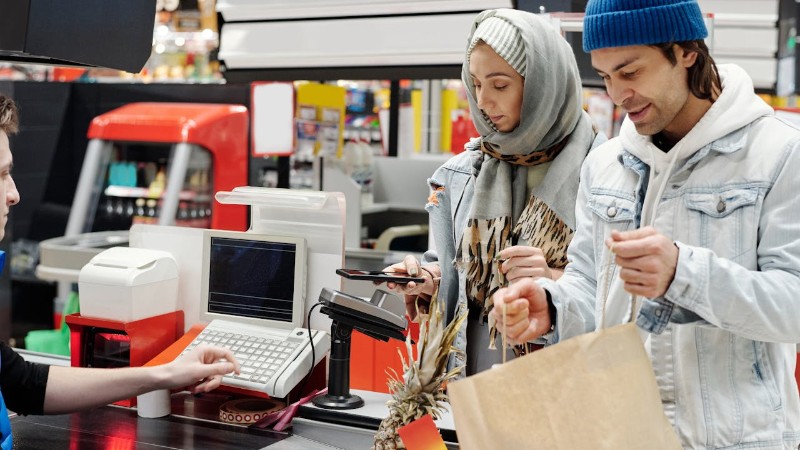
The retail checkout flow is the critical final step in the customer journey. It’s where a shopper’s experience culminates and your business secures the sale. A smooth process builds loyalty, while a clunky one can erase all previous positive impressions. This guide walks through every stage of the modern retail checkout flow, from the first item scan to the final fund settlement, explaining the technology and strategy behind it.
What is the Retail Checkout Flow? Defining the Final Mile
The retail checkout flow is the structured sequence of actions that occurs from the moment a customer decides to purchase items to the point where payment is finalized and recorded. It's the operational heartbeat of the Point of Sale (POS) system, directly impacting revenue capture, inventory accuracy, and customer satisfaction.
Core Objectives of an Optimized Checkout Process
An effective checkout flow serves two masters. For the customer, it must be fast, intuitive, and convenient. For the retailer, it must be accurate, secure, and reliable, ensuring correct payment collection and clean data recording. Balancing these goals is the key to a successful transaction.
The Evolution: From Traditional Registers to Omnichannel Checkout
Gone are the days of standalone cash registers. Today’s retail checkout flow is powered by integrated software that connects in-store, mobile, and online channels. This omnichannel approach allows customers to buy anywhere and fulfill anywhere, making the checkout process more flexible than ever.
Breaking Down the Modern Retail Checkout Flow: Step-by-Step
Understanding the sequence is essential for identifying improvement areas. Here’s how a typical contemporary checkout process unfolds.
1. Item Scanning & Price Verification
The process begins by identifying each item. While barcode (UPC/EAN) scanning is most common, RFID tags enable bulk scanning, and manual entry handles exceptions. Speed and accuracy here prevent delays and pricing errors later.
2. Cart Review & Transaction Calculation
The POS software displays the item list, individual prices, and a running subtotal. It then automatically calculates applicable sales tax and applies any promotions, discounts, or loyalty rewards, presenting the customer with a final total.
3. Payment Tender & Authorization
The customer chooses their payment method—card, cash, mobile wallet, or Buy Now, Pay Later (BNPL). For electronic payments, data is encrypted and sent via a payment gateway to the bank for authorization. This step verifies funds but does not yet transfer them.
4. Receipt Generation & Settlement
Upon authorization, a receipt is issued (printed, emailed, or texted). Settlement, the final step in the retail checkout flow, happens later in batch processes, where authorized payments are formally exchanged between banks, moving money into the merchant's account.
Key Technologies Powering the Checkout Flow
This seamless process is enabled by a stack of interconnected technologies.
The POS System: The Central Nervous System
The POS software is the hub. It manages the entire retail checkout flow, tying together inventory databases, pricing rules, customer records, and payment interfaces into one cohesive operation.
Payment Gateways and Processors
These services act as secure bridges. The gateway encrypts and routes payment data, while the processor communicates with card networks and banks to handle the authorization and settlement requests.
Supporting Hardware: Scanners, PIN Pads, and Receipt Printers
The physical tools execute the digital commands. Reliable barcode scanners, responsive customer-facing PIN pads, and efficient receipt printers are crucial for maintaining pace and professionalism.
Common Challenges and Friction Points in the Checkout Flow
Even with great technology, hurdles arise. Recognizing these friction points is the first step to solving them.
Slow Processing Times and Long Queues
System lag, complicated discount applications, understaffing, and slow payment authorizations can grind the retail checkout flow to a halt, frustrating customers and causing abandoned sales.
Payment Failures and Technical Glitches
Declined cards (often due to simple user error), poor internet connectivity dropping the POS offline, or malfunctioning card readers create immediate, stressful roadblocks for customers.
Inaccurate Pricing and Inventory Discrepancies
When shelf labels, POS databases, and central inventory files aren’t synchronized, customers face unexpected prices at checkout, eroding trust and requiring manual overrides that slow down the line.
Best Practices for Optimizing Your Retail Checkout Flow
Proactive management can transform your checkout from a bottleneck into a competitive advantage.
Streamlining for Speed: Queue Management and Staff Training
Implement line-busting with mobile POS devices during peak times. Cross-train staff to handle multiple roles and design checkout stations for minimal movement, keeping the process fluid.
Ensuring Accuracy: Regular System Audits and Price Checks
Establish a routine for verifying price integrity between shelves and the POS. Conduct regular sync checks to ensure inventory counts are accurate, preventing checkout surprises.
Enhancing Flexibility: Embracing Omnichannel and Mobile Options
Decentralize the traditional lane. Offer self-checkout (SCO) kiosks for speed, enable Buy-Online-Pickup-In-Store (BOPIS) to bypass lines entirely, and use mobile POS to check out customers anywhere on the sales floor.
The Future of the Retail Checkout Flow
The transaction moment continues to evolve, driven by technology that prioritizes convenience and insight.
Frictionless and Just-Walk-Out Technology
Powered by sensors, computer vision, and smart carts, these systems allow customers to simply pick items and leave, with payment automatically charged afterward, virtually eliminating the traditional checkout.
Deeper Personalization and Integrated Loyalty
Checkout is becoming a key moment for tailored engagement. Systems will automatically apply personalized offers and redeem loyalty points, making the transaction feel uniquely rewarding for the customer.
The Checkout as a Data Goldmine for Business Insights
Every transaction feeds a data pool. Analyzing the retail checkout flow reveals peak times, popular payment methods, and promotion effectiveness, informing smarter decisions on inventory, staffing, and marketing.
Retail Checkout Flow Questions Answered
What is the difference between payment authorization and settlement in retail checkout?
Authorization is the instant verification of funds or credit available on a customer's card. Settlement is the subsequent batch process, typically at the end of the day, where those authorized funds are actually transferred to the merchant's bank account.
How can I reduce long wait times at my retail checkout?
Implement a mix of solutions: use mobile POS for line-busting, add self-checkout kiosks, ensure your staff is well-trained and cross-functional, and regularly audit your system's speed and network connectivity.
What are the most common causes of errors during the checkout process?
Errors often stem from mismatched pricing data, outdated inventory files, manual entry mistakes, unapplied or incorrectly configured promotions, and technical glitches with scanning or payment hardware.
How is self-checkout changing the traditional retail checkout flow?
Self-checkout (SCO) decentralizes the process, giving customers control and speed for smaller baskets. It shifts staff roles from cashiers to hosts who assist customers and manage multiple stations simultaneously.
What security measures are essential for a retail payment system?
Essential measures include using PCI DSS-compliant hardware and software, encrypting payment data end-to-end, requiring PIN or signature verification where applicable, and using secure, tokenized transactions for mobile and online payments.